
India’s regulatory landscape for electrical appliances is undergoing a significant transformation. With the government tightening quality norms under the Quality Control Order (QCO) mechanism, the Safety of Household, Commercial and Similar Electrical Appliances (Quality Control) Order, 2025 stands out as a key milestone. Issued under the Bureau of Indian Standards (BIS) Act, 2016, this QCO seeks to enhance safety, performance, and consumer trust in everyday electrical devices.
QCO Details
The QCO is officially titled:
“Safety of Household, Commercial and Similar Electrical Appliances (Quality Control) Order, 2025” Issued via S.O. 2232(E), dated May 19, 2025
Product Scope
This QCO covers various electrical appliances used in homes, offices, and commercial establishments. These include:
| Sr. No. | Category | Illustrative Goods or Articles |
|---|---|---|
| 1 | Cleaning and hygiene appliances | Vacuum cleaners, water suction cleaning appliances, floor treatment machines, dishwashers, fabric steamers, air purifiers, insect killers, aquariums/garden pond appliances, humidifiers, vaporizers, toilet appliances |
| 2 | Cooking and food preparation appliances | Cooking ranges, hobs, ovens (household and commercial), griddles, grillers, toasters, steam cookers, steam-convection ovens, boiling pans, bains-marie, warming plates, multipurpose cooking pans, frying pans, deep fat fryers, coffee makers, mixers, grinders, blenders, juicers, food processors, ice-cream machines, slicers, shredders, graters, potato peelers, can openers, coffee mills |
| 3 | Heating appliances | Tumbler dryers, clothes dryers, towel rails, blankets, pads, flexible heating appliances, foot warmers, heating mats, water-bed heaters, sauna heaters, whirlpool baths, thermal storage room heaters, fixed immersion heaters, outdoor barbecues |
| 4 | Personal care appliances | Electrical shavers, hair clippers, massage appliances, beauty care appliances with lasers/intense light, oral hygiene appliances (e.g. toothbrushes), skin beauty care appliances |
| 5 | Commercial kitchen and utility appliances | Commercial cooking ranges, ovens, hobs, hob elements, griddles, grillers, toasters, steam cookers, steam-convection ovens, boiling pans, bains-marie, appliances for keeping food/crockery warm, kitchen machines, dishwashing machines, rinsing sinks, vacuum packaging appliances, commercial hoods |
| 6 | DC supplied / battery-operated appliances | Vacuum cleaners, shavers, trimmers, massage appliances, blenders, juicers, toothbrushes, foot warmers, air purifiers |
| 7 | Miscellaneous and special appliances | Electric call bells, buzzers, amusement and personal service machines, drives for garage doors, electrolysers, gas/oil/solid-fuel appliances with electrical connections, motorized furniture, personal e-transporters |
(… and so on for the remaining appliances as per your list up to 90 items, all under IS 302 (Part 1): 2024 / IEC 60335-1: 2020)
Implementation Timeline
While originally notified in May 2025, the government—considering industry feedback—extended the compliance deadline:
| Industry | Implementation date |
|---|---|
| Micro enterprises | 19th September, 2026 |
| Small enterprises | 19th June, 2026 |
| Other than micro and small enterprises | 19th March, 2026 |
Who Must Comply?
- Domestic manufacturers
- Importers
- Traders selling under their own brand
- OEM suppliers (if selling in the open market)
No electrical appliance covered under the QCO can be sold, distributed, imported, or stocked in India unless it bears a valid ISI mark.
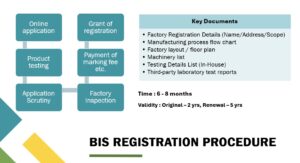
Certification Process
- Manufacturers must first identify the applicable Indian Standards (IS) for their products, such as IS 302-1 for general safety of household electrical appliances.
- They prepare and submit an application to BIS, including details of the manufacturing facility, product specifications, quality control measures, and required documentation.
- Foreign manufacturers are required to appoint an Authorized Indian Representative (AIR) who will act as their official contact for BIS and regulatory matters.
- BIS officials conduct a factory inspection to verify the manufacturing setup, testing facilities, quality assurance systems, and production processes.
- During the audit, BIS selects random product samples from the factory or stock for independent testing at a BIS-recognized laboratory.
- The selected samples undergo rigorous testing to ensure they meet all safety, performance, and construction requirements under the relevant IS standards.
- BIS reviews the results of both the factory audit and laboratory tests to determine compliance.
- If all requirements are satisfied, BIS grants a license authorizing the use of the ISI mark on the certified products.
- The manufacturer must mark the products with the ISI logo along with the license number as specified by BIS guidelines.
- BIS carries out periodic surveillance, including factory audits and market sampling, to ensure ongoing compliance with the standards.
- If non-conformance is found during surveillance, BIS may suspend or cancel the license and take legal action, including seizure of non-compliant goods.
Please send us an email at taxsupport@comercinate.com to get any support regarding your readiness for this QCO.